I devote this section to the magical and mysterious items I might encounter in my studies.
Click to show recipes
Click to hide recipes
By fixing a Block of Amethyst to some Lightning Rods, I can make quite the impressive Staff. It is quite weighty to wield but feels absolutely electrifying to use.
I learned there are troubles
Of more than one kind.
Some come from ahead
And some come from behind.
But I've bought a big bat.
I'm all ready, you see.
Now my troubles are going
To have troubles with me!
Click to show recipes
Click to hide recipes
Staves are quite heavy to wield and finnicky to hold. Should I tire of them, I can construct a gauntlet-like device that will allow me to grasp and warp the media to my will with my own hands.
Even the wand itself seems impractical to me. If you need something to grasp and shape the aura, it should be something appropriate. Something like a glove.
- Strange notes I have recovered from an odd book. Clearly this "aura" they speak of is media.
Driver Dots are small metal beads with an attuned pattern and a Hex. Whenever a Hex connected to my person casts a pattern that has no meaning to Nature, Dots on my person can prevent the usual mishap and substitute a different behavior.
A tiny engraved metal bead on a simple loop of wire through her left earlobe. A driver dot.
Program Driver (pattern, list →)
Attunes the Driver Dot in my offhand to the given pattern and Hex. Free. Netherite Driver Dots disregard the pattern given.
Create Dot
Click to show recipes
Click to hide recipes

Costs 10.0 dust
Matches on invalid that match exactly its attuned pattern, and pushes the list of iotas to the stack.
Create Dot
Click to show recipes
Click to hide recipes
Costs 10.0 dust
Matches on invalid that match exactly its attuned pattern, and casts its Hex rather than allow the mishap.
Create Dot
Click to show recipes
Click to hide recipes
Costs 10.0 dust
Matches on invalid patterns that prefix with its attuned pattern, and pushes the offending pattern to the stack before casting its Hex.
Create Dot
Click to show recipes
Click to hide recipes
Costs 10.0 dust
Matches on all invalid patterns not caught by its predecessors, and pushes the offending pattern to the stack before casting its Hex.
Click to show recipes
Click to hide recipes
By encrusting an Enchanted Book with Charged Amethyst and Edified Wood, it traps media within the pages like an echo chamber. I can then introduce up to 512 pattern-to-pattern-list bindings for the Grimoire to keep bouncing endlessly inside.
When I cast a pattern that has been associated with a list using my Staff with the Grimoire in my inventory or my Ender Chest, Nature pretends I had drawn the full list, allowing me to create shortcuts for common mantras or large patterns. The Grimoire can even overwrite Nature's patterns.
If there's a book that you want to read, but it hasn't been written yet, then you must write it.
Write Grimoire (pattern, list →)
Associates a pattern to a list of patterns in the Grimoire in my offhand.
Erase Grimoire (pattern →)
Erases any associations for a pattern that may exist in the Grimoire in my offhand.
Archivist Reflection (→ list of patterns)
Gets a list of all patterns modified by the Grimoire in my offhand.
I can weave Amethyst into any ordinary rug to create this wonderfully comfy rug. Stepping on the carpet, I can feel the media coursing under my feet. It feels disorienting but surprisingly puts me at peace.
I feel very inspired, as if I were wearing a Scrying Lens although weaker. My Hexcasting vision seems to have been expanded.
Click to show recipes
Click to hide recipes
Why is the red carpet red? It can be any color.
When ignited for the first time, either magically or with a Flint and Steel, these delightful little candles have pale white flames. Their flames change to copy the Pigment of anyone who interacts with them. I can also give them a Pigment item directly to change its color.
To extinguish, sneak use.
Click to show recipes
Click to hide recipes
Like with regular Candles, I can place them on Cakes as well.
The doctor found himself in an immense cave lined with countless quivering candles, each representing the duration of a life.
I can melt down all my Amethyst in this little jar! Unfortunately, the glass is too thick for me to draw media through it, although I have read tales that ancient Hexcasters were able to solve this issue and were able to bottle up liquid media in some kind of flask to use in their Hexes. However, this Media Jar also has some fascinating properties for recycling media.
Click to show recipes
Click to hide recipes
There, sure enough, she saw the faint translucent outline of something aboout the size of a hen's egg. There was just a touch of color in it, a pale sea-green, soft and shimmering and very beautiful.
I can dunk items into the liquid for various purposes. Items designed for holding media like Phials are filled. For many unprotected items, the media soaks in and transmute the item in unpredictable and often surprising ways.
Transmuting can be done in-world by using an item on the jar, in my inventory similar to a Bundle, fed via a Hopper, or using the Hopper spell.
Enchant Apple
Click to show recipes
Click to hide recipes
Costs 100.0 dust
Imbues a Golden Apple with a tremendeous amount of media, transforming it into the rare and more potent Enchanted Golden Apple.
Sadden Obsidian
Click to show recipes
Click to hide recipes
Costs 5.0 dust
Infuses Obsidian with media which leaks out of it, giving it a distinctive crying appearance.
Calm Obsidian
Click to show recipes
Click to hide recipes
Yields 2.0 dust
Returns the media from Crying Obsidian.
Therapy! :D
Weave Thought-Knot
Click to show recipes
Click to hide recipes
Costs 0.75 dust
Crafts Thought-Knots by submerging String in a large volume of media rather than brushing an Amethyst Dust on it. A slightly more efficient recipe.
Release Memory
Click to show recipes
Click to hide recipes
Yields 0.5 dust
Sucks the media out of a Thought-Knot. Loses media compared to the crafting recipe, but useful for recycling the little bit of media.
Coal
Click to show recipes
Click to hide recipes
Costs 0.5 dust
Transforms Charcoal into Coal by infusing thought into it and then immediately killing it. Good for compacting.
Charcoal
Click to show recipes
Click to hide recipes
Yields 0.25 dust
Transforms Coal into Charcoal. Why?
Hexcasting is an Art just waiting for me to lose track of my casting and Nature is all too ready to punish my carelessness the moment it happens.
Fortunately, Nature also provides a method for me to reflect on my folly... only after suffering the consequences of them, of course.
Click to show recipes
Click to hide recipes
They call it the Error Media Log. I simply stab a shard of Amethyst through an Edified Log and for some reason, Nature is now ready to spill my errors straight into my mind.
The Media Log will only capture mistakes cast by my Staff and the casting devices I use.
By holding it tightly and meditating on it, it reveals to me the last handful of patterns cast sequentially (even by other patterns, all flattened out into a linear stream), the mishap that occured, and the top few iotas of the stack right before mishap.
I could hypothetically use it as a method of examining the contents of a casting device after casting it, although the short backlog of patterns makes getting a complete Hex out of anything but the simplest items impossible.
Now you may only see a pile of receipts, but I see a story. I can see where this story is going. It does not look good.
Click to show recipes
Click to hide recipes
Once I have recovered some Periwinkles, I can string the flowers into a Lei! The Lei provides a few boons reminiscent of the Scrying Lens, although noticeably weaker.
When worn, the naturally calming abilities of Periwinkles helps to ward off my fall into madness. This is most noticeable in that it prevents Nature from claiming my life as payment for Hexes.
A Lei can be placed on another person who is not wearing a helmet. Hexcasters did this as a sign of endearment and affection due to the Lei's protective abilities, as well as the effort of obtaining the flowers.
There is an long-extinct species of flowers called Periwinkles. In addition to looking pretty, they have great calming abilities; ancient Hexcasters used them to cope with the great horrors that comes with the Art.
A special flower for a special person.
Induce Digging (entity →)
Fortunately, the Art of Hexcasting is a versatile one and provides the means to bring back near anything.
I believe that there is a certain creature capable of sniffing out these flowers. I can cast the previous spell on these Sniffers to compel them to immediately drop down and unearth these flowers for me.
Such a perversion of free will comes at a cost, around three Charged Amethyst. There may also be the occasional harmless mental error; I am not infallible after all, especially working with something as complex as the mind.
Some magic must be at play here: Sniffers can dig up Periwinkles from any block at all, even inorganic ones or ones orginating from other planes of reality.
I imagine that the spell doesn't just "ask" the Sniffer to find the flowers; it conjures them. It fishes around in the brain for the memory of Periwinkle and from that, it receives a template which it instantiates and allows the Sniffer to dig up. And if it can do it, so can I.
Plushies
The ancient Hexcasters have created these delightful Plushies! They seem to be references to some of the patterns I use in Hexcasting. I'm not sure if they do anything, but they are a lovely little collector's item.
The occasional wandering merchant might have picked up one or two during their travels.
This one looks slightly deranged. I feel slightly anxious having it in my inventory.
This one seems to sleeping. I feel strangely assured with it on me, as if it were watching over me.
This one seems to stare directly at me no matter where I put it. What have you seen, great Irissy?
This one might have been made by a bad craftsman. It's not even on a hexagonal grid!
... I'm starting to think these were made intentionally.
The detail on this plushie is unnaturally good. Flexxy must have been quite the idol for this much effort to be poured into its effigy.
These Potions let me forget some of the eldritch knowledge Hexcasting provides. A base dose removes my ability to trade my own life for media, useful if I do not want to be carried off from a mere miscalculation. Higher potencies remove the ability to cast great spells entirely, possibly useful as an offensive tool.
It is unseen.
I can brew one by boiling a Periwinkle into a simple Awkward Potion. Glowstone Dust and Redstone Dust have their standard amplifying and lengthening effects, as with most potions.
The Lodestone inside seems to make this block and the entities shoved in it always within my Hexes' ambit, although I prefer to believe the Wool invites my Sentinel. Cats seem to find it cozy too, like a lit furnace or a bed.
I hear rumors of ancient Hexcasters using this as some kind of iota storage from any range but I struggle to imagine how.
Click to show recipes
Click to hide recipes
A comfy bed for my sentinel, it always seems eager to return to it.
Curios are decorative items created by whittling a piece of Charged Amethyst inside a Stonecutter.
They have an odd interaction with the Charm spell; after being charmed, being deprived of that charm via the Discharm spell or using up the media causes the Curio to shatter.
Based off rumors of a mineral called bismuth that tends into these geometric formations. I have yet to encounter it but I was able to replicate its supposed shape.
I don't believe that such an shape would emerge naturally but Nature delights in surprising me.
A four-leaved clover, based off a universal symbol of good luck. I can't imagine why four is the number that compels Nature to bless the holder with luck, if anything it should be six, but I have dutifully copied its appearance. I wonder if that superstitution still applies when it's carved out of a crystal.
A Compass. If the Charm Hex leaves a vector on top of the stack, the compass needle immediately swings to face the vector.
This even works in places with inconsistent spatial rules that scramble ordinary Compasses. I can also read it to get a unit vector.
An intricate seashell. When held close to the ear, I can make out the sound of ambient media; it sounds like waves on a beach.
Perhaps not thinking about it too deeply is the only thing stopping me from drowning in it. It feels like swimming through honey.
A boring, but classic simple cube. I live in a world of blocks, it is only fair to depict one.
A musical instrument. I can play it by looking up or down and using it.
If the Charm Hex leaves a number on top of the stack, the Curio will play a single note after use; the same note created by Make Note imitating a flute with the number as the second argument.
A small, quaint handbell that produces two short chimes when shaken. Branded with the symbol of a deity.
Historically, bells such as these have been used to call for assistance and summon helpers. I will need to charm it to conjure my own helpers.
Ancient Hexcasters often made Curios of this shape to communicate their adoration for each other.
I can feel it beat slightly in my hands despite being made of an inert crystal.. perhaps it is because I imagine that it should beat.
A pair of rings that I have intricately carved to be separate but interlocked and impossible to separate without breaking one of the rings.
To invoke its charm, I grab both rings and yank, slamming them against each other.
A caricature of a key. It does not fit any lock that I know of and lacks the parts to even work with a standard lock.
Perhaps I have to be the one to make a lock that fits the key instead of the other way around.
A very polished staff, somehow formed from a single crystal. I can not use it like a regular Staff sadly. When charmed, it produces audible wooshes of media.
I wonder if a Staff constructed of Amethyst would consume itself when I try to cast a Hex.
A cutting of a raw crystal into a generic gemstone shape that for some reason raises its perceived value tremendously.
Regrettably, it is too big and Amethyst is too cloudy of a material for it to have the radiance I was expecting. Perhaps perfection is boring.
A distortion of the Charm Curio, with deliberate overcutting and the introduction of protrusions.
Oddly enough, all the edges and sharp corners and knobs give it a much more vibrant and intricate play of light than the Charm Curio.
A small and dense bead of Amethyst. I have made it by sanding off much of the crystal it came from and compressing until I had produced a small, near-perfectly spherical object.
Like its concept, despite being small, it carries a great deal of weight.
As the opposition to the Beauty Curio and representing the abstract concept of truth, this Curio is sharper and multifacted, resembling a teardrop. I have cut it in an odd polarizing way such that each of the four quadrants along the gem catch the light in a slightly different way.
An upwards facing arrow. Cut in such a way that the center of balance faces downwards, making the item swing to face upwards at all times.
This design is often used by Hexcasters to express approval.
A downwards facing arrow. The cutting is slightly altered to be distinct from just holding the Up Curio upside down, letting it catch the light in a slightly different angle and always face down instead.
This design is often used by Hexcasters to express disapproval.
A Pedestal can keep an item suspended safely for me. Unlike an Item Frame or a Chest though, my Hexes can still interact with the item as though it were just dropped on the floor. An empty Pedestal can pull items near it and it interacts with Hoppers about how I would expect. It works even if the item is swapped out.
Click to show recipes
Click to hide recipes
A pedestal is as much a prison as any small, confined space.
I hear of an item that contains a genie inside of it. From my research, wandering merchants—unable to use its potential—may sell it. It is a simply brilliantly designed casting device. Sadly details on its creation and the entity living inside have been lost to time.
Like a Trinket, it has an inscribed Hex and can only use its own reservoir of media, but the reservoir is expandable up to ten thousand Amethyst Dust and the Hex is freely rewriteable.
Wish (list, number →)
Wish the genie in my offhand to cast a Hex for me and refuels the Lamp by the given amount of Amethyst Dust, taken from my inventory.
Of course, to compare it to a Trinket is insulting. It casts EVERY INSTANT. When holding down the switch, I am treated to a splendid unceasing gush of media. The casting entity inside must be magnitudes stronger than I am—I can only estimate it fires off a Hex twenty times every second until I let go.
Interestingly, the device produces very little of the sounds and particles that accompany other casting methods, perhaps a testament to how efficient this being is.
Genie Refl.: Spatial (→ vector)
Pushes my original position when I began using the Lamp.
Genie Refl.: Rotational (→ vector)
Pushes my original rotation when I began using the Lamp.
Genie Refl.: Kinetic (→ vector)
Pushes my original velocity when I began using the Lamp.
Genie Refl.: Temporal (→ number)
Pushes how many times the Lamp has cast since I began using the Lamp. I can divide by by 20 to convert to seconds.
Genie Gambit (any →)
Asks the genie to remember an iota for me. Strangely, the genie seems able to bypass the Transgress Others mishap, perhaps because it requires my active concentration to use this Lamp.
Genie Refl.: Memory (→ any)
Requests the iota I had saved to the genie to be pushed to the top of the stack. If I had not previously saved anything, the genie pushes Null.
Finale Reflection (→ boolean)
When my Lamp deactivates, it casts an additional time. I can use this pattern to recognize whether a cast is that finale, and react accordingly.
This variant is acquired in much the same way as the Hand Lamp, although harder to come by and even stronger still. It requires far less supervision than its more common sibling: I simply rub the lamp for a few seconds while wishing deeply, and it activates. While anywhere on my person, it will cast with the same mind-boggling speed. The genie stops casting when it falls onto the ground, or when I repeat the activation motion. It can use all the same patterns.
Patterns and actions that perform a magical effect on the world.
The blocks from Conjure Block last forever, are consequently a pain to clean up, and are not too versatile. Luckily, Nature offers an elegant and flexible alternative. These Mage Blocks come with a suite of modifiers. I could even stack multiple modifiers on one block and analyze its composition with a Scrying Lens.
Conjure Mage Block (vector →)
Conjures a Mage Blocks at the location. Costs about three Amethyst Dust.
I can create a city out of nothing, or I can cover it in volcanic rock.
Reset Mage Block (vector →)
Conjures a Mage Blocks at the location. Costs about three Amethyst Dust.
I can create a city out of nothing, or I can cover it in volcanic rock.
Bouncy (vector →)
Makes the block bouncy, like a Slime Block. Bounces me regardless of whether I am sneaking. Delightfully fun!
Energized (vector, number →)
Sets the Redstone power outputted by this Mage Block.
Ephemeral (vector, number →)
Sets the duration after which a Mage Block will spontaneously disappear.
Volatile (vector →)
Breaking volatile Mage Blocks shatters others it is touching. This can cascade until every connected volatile block shatters.
Rotation is done via with stationary teleportation at a different orientation. The sudden perspective change is already highly disorienting; the floor leaving your feet only to be shoved back onto it again is more so.
For this reason, Nature abhors entity rotation... or perhaps it trivializes Nature's carefully constructed schemes.
Rotate Block (vector, vector →)
Rotates a block to face a certain vector direction. Requires a rotatable block. Costs about an eighth of an Amethyst Dust.
Rotate Entity (entity, number, number →)
Rotates an entity by a given change in pitch and yaw, expressed in radians.
Nature seems to be against entity rotation. Rather than a straightforward vector, Nature demands measurements in radians by which to turn horizontally and vertically.
The cost is strange and multilayered too. Free if cast on myself, about half of an Amethyst Dust for other entities, and the natural aura of media surrounding a person elevates the cost to about a whole Charged Amethyst.
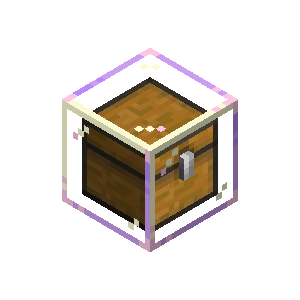
I can not simply pick up a Chest and move it under most circumstances; the contents would spill everywhere. Fortunately, there is a spell for that. Inspired by a strange material called amber that is able to preserve moments of history, this spell encases a block in a shell of amethyst and cuts it off from the external world.
Sealed blocks demonstrate two main properties. The first is that they are frozen in the moment they were sealed. A Furnace will have the appearance of burning but its items do not cook.
The second, more useful, property is that I can break them with just my bare hands without disturbing the inner contents, place them elsewhere, and unwrap them. No items spill out and most blocks seem entirely unaltered.
Amber Seal (vector →)
Preserves the block at the given location in amethyst. Costs about one Charged Amethyst.
Using precise manipulation of media, I can magically etch my signature onto any item! It must be done with my Staff as proof of intentionality.
An autographed item proudly displays every autographer's name in shimmering Pigment.
I disagree strongly with whatever work this quote is attached to.
Autograph
Autographs the item in my offhand with my name and Pigment. Autographing an item with my name already on it moves my name to the top of the list.
Because an autograph is strongly imprinted on an item, Erase Item is insufficient to remove it; a specialized spell is required to extripate autographs.
However, a spell capable of doing by its very nature will also destroy a Focus's contents or a casting device's Hex and media. Perhaps that is for the better—my autographed Hexcasting gifts can be uniquely assured to be untampered.
Unautograph
A more destructive form of Erase Item, capable of burning off autographs. Costs about one Amethyst Dust similar to Erase Item.
Authenticator's Dstl. (item stack, entity → boolean)
Pushes whether a given person has signed a given item stack.
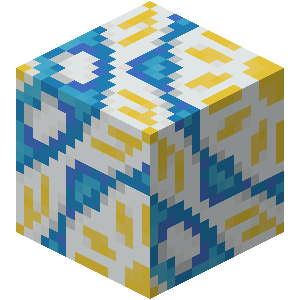
The dye spell and its specialized iota allows me to alter the color of blocks and entities. The dye iota represents a color, but also seems to represent the potential to be colored. For example, attempting to get the dye of grass returns Null but getting the dye of undyed terracotta returns uncolored, which I can use to "bleach" dyeable blocks.
Chromatic Purification (id/vector/entity → dye/null)
Gets the dye of a block, entity, or block/item identifier.
Dye (vector/entity, dye →)
Dyes a dyeable block or entity. Costs about an eighth of one Amethyst Dust.
hexical.recipe.dyeing.bed.text
hexical.recipe.dyeing.candle.text
hexical.recipe.dyeing.carpet.text
hexical.recipe.dyeing.concrete.text
hexical.recipe.dyeing.concrete_powder.text
hexical.recipe.dyeing.glazed_terracotta.text
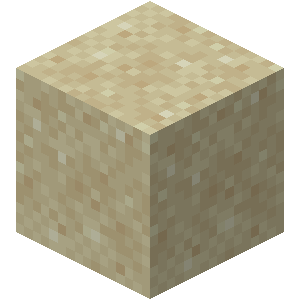
hexical.recipe.dyeing.sand.text
hexical.recipe.dyeing.sandstone.text
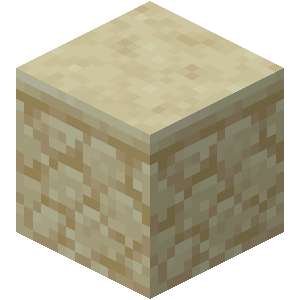
hexical.recipe.dyeing.cut_sandstone.text
hexical.recipe.dyeing.smooth_sandstone.text
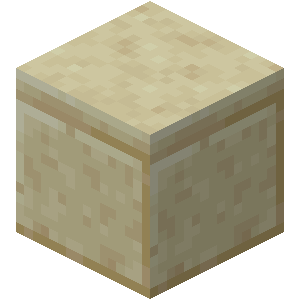
hexical.recipe.dyeing.chiseled_sandstone.text
hexical.recipe.dyeing.sandstone_slab.text
hexical.recipe.dyeing.cut_sandstone_slab.text
hexical.recipe.dyeing.smooth_sandstone_slab.text
hexical.recipe.dyeing.sandstone_stairs.text
hexical.recipe.dyeing.smooth_sandstone_stairs.text
hexical.recipe.dyeing.sandstone_walls.text
hexical.recipe.dyeing.shulker_box.text
hexical.recipe.dyeing.stained_glass.text
hexical.recipe.dyeing.stained_glass_pane.text
hexical.recipe.dyeing.terracotta.text
hexical.recipe.dyeing.tulip.text
hexical.recipe.dyeing.wool.text
hexical.recipe.dyeing.dye.text
hexical.recipe.dyeing.pigment.text
Interacts with either a position or an entity through a telekinetic force. It takes an optional item entity to use as a tool or can simply act emptyhanded. It also takes in a boolean for whether the force should be sneaking, which raises all sorts of questions...
A spectral, floating hand appears at a point you choose within range.
Mage Hand (ent/vec, ent/null, bool →)
Magically interacts with the world by conjuring an unseen force. Costs about one Amethyst Dust.
A bizzare counterpart to the Mage Hand spell. It makes me eat a given item entity instantly, regardless of the time required to normally consume it, any cooldowns on it, my own dietary restrictions, or if I am full.
Let food be thy medicine and medicine be thy food.
Mage Mouth (entity →)
Makes me eat an item, nourishing me or applying status effects to me. Costs about one Amethyst Dust and mishaps if the item is not edible.
Magic Missile (vector, vector →)
Conjures a small silver of amethyst that always deals a full heart of damage and forces the target backwards. Costs about one Amethyst Dust.
The projectile has a few interesting properties. It automatically disappears after roughly ten seconds or shatters upon hitting an entity or block. It pierces all forms of armor and protection. It is also unaffected by gravity and water drag.
A weak but enchanting sparkling projectile.
The first vector is conjuration location and is quite esoteric: no wonder most Hexcasters conjure it in front of them. The basic gist is a vector, where my head's position is the origin, my facing is the Z+ axis, the vector pointing up from my head is the Y+ axis, and the vector from my head pointing rightwards is the X+ axis. For basic purposes, the zero vector conjures it inside my head and a vector resembling (0, 0, n) conjures it n blocks in front of me.
The second vector is velocity and thankfully much less complicated. It is a simple offset vector, similar to the one that Impulse takes in. Unlike Impulse though, this vector can be of arbitrary magnitude without incurring additional costs.
Unlike Arrows though, Magic Missiles will not increase in damage simply by travelling faster. They also apply an odd knockback effect that ignores the entity's mass or the projectile's speed.
Like how I can manipulate dyes with Hexcasting, I can also manipulate pigments. I can even store multiple of them and have my Hexes randomly choose one to me.
Pigment Purification (dye/entity → pigment)
Takes a colored dye iota and transforms it into a pigment, takes a person and returns their pigment, or takes an item containing a pigment and returns its pigment.
Pigment Exaltation (pigment, vec, num → vec)
Samples the pigment at a certain place and time as a vector, where each component is from 0 to 1 and represents the red, green, and blueness respectively.
Internalize Pigment II (pigment →)
Internalizes a pigment iota.
Rather than a specific effect, this spell performs dozens of minor magical feats. It interacts with a vast array of blocks and entities, and I always discovering new applications for it.
Notes simply describes it as "do magic"; the general rule of thumb is any small effect a wizard can effortlessly will into existence, this spell can replicate.
Prestidigitation (entity/vector →)
Causes a small magical effect, not too distinct from the original nature or function of the target. Costs about a tenth of one Amethyst Dust.
I've compiled all of its recorded uses but there is no guarantee all have been found: opens and closes fence gates, trapdoors, and doors of any materials; flicks levers and presses buttons; holds down and releases pressure plates; extinguishes fires of all kinds; lights and extinguishes candles, candle cakes, and campfires; ignites soul fire on blocks that support it; rings bells; strips wood; carves pumpkins; makes a note block play its sound; dries mud into clay; toggles Redstone lamps;
triggers dispensers and droppers; turns most soil blocks into path blocks and path blocks into tilled soil; drain cauldrons; modifies the state of Redstone repeaters, comparators, and daylight sensors; ignites and deprimes TNT and creepers; shears sheep; toggles armor stand arms; squirts squid; makes pandas sneeze; removes the helmet of a snow golem; inflates pufferfish; takes honeycomb from beehives and nests; dry and soak sponges; alter the color of mushrooms;
add about five seconds of fuel for the various types of furnaces; transform the variants of froglights, and activates some grand Hexcasting work.
While telepathy is more concerned with reading thoughts, it is also possible to induce thoughts. I have documented such spells in this chapter.
Fortunately none of these spells thus far can make me say or do actions that I wouldn't want to, but it is a possibility I shall remain wary of.
The spells here push thoughts onto my or other people's brains. It only makes sense that Hexcasting can perform such a thing, being the energy of thought, although it is unsettling that my ideas and my mind are so malleable.
I had a dream that I was a happy butterfly. Am I a person who dreamt that I were a butterfly, or am I a butterfly now dreaming that I am a human?
Send Thought (any →)
Momentarily displays an iota above my hotbar. If cast repeatedly, each cast overwrites the previous instantly.
Shout Thought (any →)
Grandly flashes an iota across my vision. It seems to take some time to fade in so it can not be cast as frequently as its less intrusive sibling.
Toast (player, any, any, item →)
Sends a non-urgent yet highly specific thought to a person's mind. Is free if I am targeting myself; otherwise costs about one Amethyst Shard.
This spell can accept a specific person to target, possibly because the thoughts it produces are only marginally above idle noise.
Then, it takes any two iotas, which I can best describe as the 'title' and 'description' of the thought, speaking abstractly of course. These iotas can not be recovered by the receiving person. Finally, it accepts an item stack that the person will also be able to mentally ponder.
I can perform the standard magic trick of vanishing an item and bringing it back. The item hides in the wristpocket, where I can use media to manipulate it. The wristpocketed item stays with me even after death and I can recall it once I can cast again.
Because making something disappear isn't enough; you have to bring it back.
Wristpocket
This spell vanishes the stack of items in my other hand, or conjures it back, swapping if my other hand is holding something. Costs about a eighth of one Amethyst Dust.
While the items disappear from reality in almost all measurable aspects, certain items' effects can still function even when hidden in the wristpocket.
I hear of certain Totems that still function within the wristpocket. Phials also can still provide for my Hexes within the wristpocket.
Wristpocket Reflection (→ item)
Returns the item in my wristpocket, or Null if it is empty.
Sleight (item entity/vector →)
Performs an act of magical sleight of hand to steal items into my wristpocket or expel my wristpocket back into the world. Costs about a fourth of one Amethyst Dust.
If given a vector, it conjures my wristpocketed item at that vector. If given an item entity, my wristpocket either pulls in or swaps with the item, depending on whether it is empty.
If your sleight of hand causes you to break eye contact with your audience, it is too advanced for your skill level.
Conjure Flora (vector, identifier →)
Conjures flora of my choosing at a specified location. The cost depends on the specific species.
The block beneath the target position must have a flat top surface, but does not need to be able to support the plant naturally. Any little movement may cause it to break if conjured on an unnatural block. Alternatively, the spell can fill a flower pot if the flower is compatible.
There was a fool who praised me for the magic I acquired. That's all.
Documented on the next few pages are the species, prices, and short descriptions (recording useful notes, amusing details, or just an appreciation for the species) for all the possible options that I have discovered so far.
For certain flowers that stack, like Pink Petals and Periwinkles, I can recast the spell multiple times to stack on more.

Pink Petals
Costs 0.25 dust
This species is surprisingly cheaper than most other species; perhaps Nature is being uncharacteristically nice due to the large quantities of these I may want to create.

Grass
Costs 0.3 dust
Grows in plains and forests, and is annoying to clean up. Sheep can eat it to regrow their Wool or grow up faster. May drop Wheat Seeds or itself if using Shears.

Tall Grass
Costs 0.3 dust
A taller variant of Grass. May drop Wheat Seeds or if broken with Shears, drops two Grass.

Fern
Costs 0.35 dust
A leafy plant found in only jungles and the various taiga biomes that is functionally equivalent to Grass in nearly every aspect.

Large Fern
Costs 0.35 dust
A taller variant of Ferns that appears in only the same biome as Ferns. Functionally equivalent to Tall Grass.

Nether Sprouts
Costs 0.35 dust
Small cyan fungi that carpet warped forests in the Nether. Surprisingly, these have no crimson variant.

Seagrass
Costs 0.35 dust
Sways gently in the ocean currents. Requires Shears to obtain. Surprisingly resistant to Lava trying to flow into it and can be used to breed, grow up, and lead Turtles. Also produces water source blocks, useful for elevators.

Dandelion
Costs 0.5 dust
An edible and surprisingly nutritious flower. Can be crushed to create Yellow Dye or incorporated in a Suspicious Stew for a very filling meal.

Poppy
Costs 0.5 dust
Contains sedative and hallucinogenic pollen. I wouldn't be surprised if it could put a person to sleep if they were to stumble through a field of it, although incorporating it into a stew only gives some minor night vision. Can be crushed into Red Dye.

Blue Orchid
Costs 0.5 dust
My research claims that blue orchids do not exist in nature, yet here one is. I believe someone must have injected them with dye, and then Nature simply found a way. Can be crushed to create Light Blue Dye or incorporated in a Suspicious Stew for a very filling meal.

Allium
Costs 0.5 dust
Once believed to ward of evil and harm, especially in its onion and garlic forms. Can be crushed to create Magneta Dye or incorporated in a Suspicious Stew to protect against fire.

Azure Bluet
Costs 0.5 dust
Rather short and easy to overlook. Can be crushed to create Light Grey Dye. If incorporated in a Suspicious Stew, it fittingly produces blindness.
One day blinding stew.

Red Tulip
Costs 0.5 dust
A bold red flower that can be crushed into Red Dye or incorporated in a Suspicious Stew, although it weakens the consumer.

Pink Tulip
Costs 0.5 dust
A soft pink flower that can be crushed into Pink Dye or incorporated in a Suspicious Stew, although it weakens the consumer.

Orange Tulip
Costs 0.5 dust
A warm orange flower that can be crushed into Orange Dye or incorporated into a Suspicious Stew, although it weakens the consumer.

White Tulip
Costs 0.5 dust
A slightly off-white flower that can be crushed into Light Grey Dye or incorporated into a Suspicious Stew, although it weakens the consumer.

Oxeye Daisy
Costs 0.5 dust
Historically known to be used in herbal medicine to heal wounds, so it incorporates nicely into a Suspicious Stew and boosts my natural regeneration. Can be crushed into Light Grey Dye.

Cornflower
Costs 0.5 dust
Associated with vitality and traditionally used in folk medicine as a stimulant. Can be crushed to create Blue Dye or incorporated in a Suspicious Stew to grant a bit of an extra vertical boost when jumping.

Lily of the Valley
Costs 0.5 dust
A highly poisonous flower. Can be crushed into a brilliant pale White Dye or incorporated in a Suspicious Stew confers its poisonous properties.

Sunflower
Costs 0.5 dust
Always rotates to face the sunrise, no matter how I try to orient them. Can be crushed to create Yellow Dye.

Rose Bush
Costs 0.5 dust
A double-tall bush of thorny flowers. The individual flowers bear a striking resemblance to Poppies although roses on their own do not seem to exist. Can be crushed into Red Dye.

Peony
Costs 0.5 dust
A light purple-like double flower that oddly when crushed produces Pink Dye rather than purple or magneta as expected. Perhaps the light hits it differently.

Lilac
Costs 0.5 dust
A tall flowering shrub with a pleasant purple hue. Can be crushed to produce Magenta Dye.

Kelp
Costs 0.5 dust
Grows at the ocean floor. Can be dried into Dried Kelp for a quick although joyless and unfilling snack that is quick to choke down.

Red Mushroom
Costs 0.6 dust
A classic spotted red and white mushroom. An ingredient in Mushroom Stew, Rabbit Stew, and Suspicious Stew. Highly hallucinogenic. It may be grown into a huge mushroom with Bonemeal.

Brown Mushroom
Costs 0.6 dust
The more understated of the two, can be used in all the same stews, but also in the creation of Fermented Spider Eyes, a useful inverting potion ingredient. It may be grown into a huge mushroom with Bonemeal.

Crimson Fungus
Costs 0.6 dust
Hoglins enjoy the taste of this one and it can be used to breed them, although it won't pacify them. It may be grown into a huge mushroom with Bonemeal.

Warped Fungus
Costs 0.6 dust
Hoglins find it repulsive and take all means to avoid it, although it can be put on a stick to command Striders and even breed them. It may be grown into a huge mushroom with Bonemeal.

Crimson Roots
Costs 0.6 dust
Red tendrils that appear in crimson forests. They are purely decorative.

Warped Roots
Costs 0.6 dust
Teal roots that appear in warped forsts. They are purely decorative.

Sea Pickle
Costs 0.6 dust
A bioluminescent colonial organism that emits a soft green glow underwater. Can be smelted into Lime Dye. Not actually a pickle.
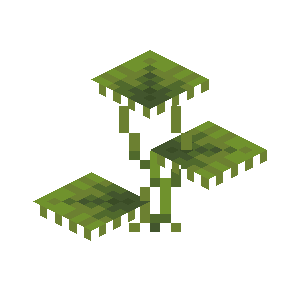
Small Dripleaf
Costs 0.7 dust
A tiny aquatic plant that serves mainly as the precursor to something more exciting.

Big Dripleaf
Costs 0.7 dust
A broad leaf that tilts and drops anything standing on it after some time. Even works with Redstone somehow.

Dead Bush
Costs 0.75 dust
A brittle, desiccated twig that somehow still works for this spell. Can be used to conjure Sticks, making it surprisingly one of the more useful flora I can conjure.

Nether Wart
Costs 0.75 dust
A crucial ingredient in the brewing of any useful potion, although other bases exist. Grows on Soul Sand only and has mildly addictive properties.

Periwinkle
Costs 1.0 dust
A pale purple flower that forms clusters on the ground, like Pink Petals. Has a calming effect, although it has gone long extinct. It was of particular cultural significance to Hexcasters.

Torchflower
Costs 1.5 dust
A long extinct flower. If incorporated into a Suspicious Stew, it may have conferred vision similar to that given by Poppies. Can be crushed into Orange Dye.

Pitcher Plant
Costs 1.5 dust
A carnivorous flowering plant, also long extinct. Can be crushed into Cyan Dye.

Bamboo
Costs 5.0 dust
Grows faster than almost anything else, and is adored by Pandas. Can be used as fuel or scaffolding.

Acacia Sapling
Costs 5.0 dust
Grows into distinct flat-canopied acaia trees in savannas. Produces warm orange wood.

Birch Sapling
Costs 5.0 dust
Grows into pale wood and trees whose bark uncomfortably resembles eyes. I feel something may be watching me through them. It doesn't grow branches either.Watches from within birch trees.

Cherry Sapling
Costs 5.0 dust
Grows into a warm, rosy, and lovely pink wood that shed beautiful petals idly.

Dark Oak Sapling
Costs 5.0 dust
Must be planted in a 2x2 arrangement to grow. Produces dark, rich wood at a faster rate than most other trees and this species of tree has a chance to produce Apples.

Jungle Sapling
Costs 5.0 dust
Can grow into a colossal jungle tree if given enough space and planted in a 2x2 formation, or can grow into a smaller tree if alone.

Oak Sapling
Costs 5.0 dust
The most common tree type. This species has a chance to produce Apples.

Spruce Sapling
Costs 5.0 dust
Grows into a tall, dark conifer tree well-suited for cold biomes where it tends to live, with no branches. A 2x2 formation makes a particularly massive mega-spruce tree. Spreads Podzol where it grows.

Mangrove Propagule
Costs 5.0 dust
Hangs from mangrove trees and can be placed directly in water. Produces a strikingly red wood with an unusually pronounced root structure. Has an rare chance to create a Beehive complete with bees when it grows.

Sugar Cane
Costs 5.0 dust
Grows in tall stalks by the water. It is the essential ingredient of Paper, Sugar, and by extension, every Map and Book.

Wither Rose
Costs 10.0 dust
The Wither plants this flower when it kills a mob. Inflicts Wither on contact and can be crushed into Black Dye. Unsurprisingly, it continues to wither if added to a Suspicious Stew.
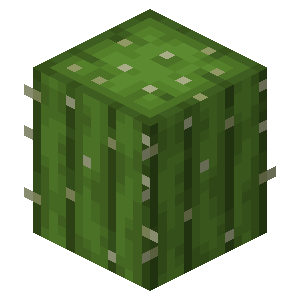
Cactus
Costs 10.0 dust
Idly damages mobs touching it and can destroy any item that falls on it. Can be smelted into Green Dye.
Confetti (vector, number/vector →)
Creates a loud bang similar to that of Fireworks and a burst of colorful particles, either in a direction or in a radial blast. Costs a negligible amount of media.
The particles are harmless and flutter through the air for quite long until they reach the ground. The first vector is a position and the second controls direction. If it is a number, it indicates speed to explode in in all directions; a vector makes the particles tend towards the given direction. Both the number and the vector's magnitude may not exceed 2.
The rest is confetti.
Silence (entity →)
Curses an entity to be silent, or lifts the curse. Costs about one Charged Amethyst for cursing and is free to lift.
Strangely, even striking the entity produces no sound; the curse creates a kind of silencing field rather than disabling their vocal cords.
If I am wearing a Scrying Lens, I can see a floating symbol appears above the head of afflicted entities.
Silence will fall.
Vibrate (vector, entity/vector, number →)
Causes a visible pulse of vibration from a vector to an entity or vector over a number of seconds. Costs a negligible amount of media.
The effect, while resembling the pulses produced by Sculk Sensors, is entirely distinct. It is a purely visual effect.
The duration can range anywhere from zero seconds to ten seconds.
If a tree falls in a forest and no one is around to hear it, does it make a sound?
Sparkle (vector, vector, number →)
Produces a small sparkling particle of my desired position, color, and lifespan. Costs a negligible amount of media.
The first vector controls position and the second vector controls color. Each component should range from 0 to 1 and corresponds to red, green, and blueness respectively. The final number dictates how long the sparkle should remain in twentieths of a second, up to five seconds.
All that glitters is not gold.
Crack Device
Cracks the unprogrammed casting device or Curio in my offhand. Cracked casting devices proudly display their Hexes. Costs about one Charged Amethyst.
This spell will blind me for a quite a duration if I attempt to expose the innerworkings of an already-written device. For a moment though, I believe I had glimpsed the Hex before my eyes and brain filled with media.
Nowadays time runs by electricity and vibrating crystals of quarts and goodness know what else..
- clearly a reference to Amethyst.
Illuminate (vector, number →)
Conjures a completely invisible light with illumination strength of my choosing at a location. Costs about a quarter of an Amethyst Dust.
The block that it is into must be empty or extremely weak. The illumination strength can be a number between 1 and 15, inclusive. If I target a space where a light already exists, the spell is free and particleless.
By holding a Scrying Lens, I can see the lights and place a block in their place to remove them.
The light blinds us. It is only in the dark that we see clearly.
Gasp (entity →)
Instantly replenishes a creature's air bubbles. Costs about one Amethyst Dust.
Regardless of amount of breath restored, this spell costs exactly the same so I should wait as long as I safely can before casting this spell. I will find it useful while diving, being teleported into a block, or even keeping sea creatures alive on land.
The best way to observe a fish is to become a fish.
Squawk (vector, identifier →)
Emits a sound associated with a mob near a location, as though a parrot had imitated that mob. Costs about a half of an Amethyst Dust.
This spell does nothing but still consumes my media if a parrot can not replicate the sound.
I can already imagine this spell's use for playing practical jokes on my friends and enemies. Perhaps Nature does permit me to have fun occasionally with my Hexes.
Hisss...
While conjuring projectiles from pure media manipulation should be prohibitively expensive, Nature offers a set of cheaper spells to create certain projectiles.
These spells push the conjured entity to the stack, which I must manually propel in my desired direction.
Can I offer you a nice egg in this trying time?
Conjure Egg (vector → entity)
Conjures an egg. May be fertile. Costs about two Amethyst Dust.
Conjure Spit (vector → entity)
Conjures a sticky low-damaging projectile. Costs about a fourth of one Amethyst Dust.
Conjure Snowball (vector → entity)
Conjures a harmless snowball. Costs about half of an Amethyst Dust.
Conjure Fireball (vector → entity)
Conjures an explosive fireball that can be percussively propelled. Costs about three Amethyst Dust.
There exist other spells too complex to be given justice in this chapter—I have dedicated other chapters to them.
Magic Missile is a standard quick and versatile spear of amethyst that can be produced and fired at arbitrary speed.
I can also utilize fireworks for battle.
Finally, a certain spell allows the ability to fire potions and arrows.
Silence (entity →)
Curses an entity to be silent, or lifts the curse. Costs about one Charged Amethyst for cursing and is free to lift.
Strangely, even striking the entity produces no sound; the curse creates a kind of silencing field rather than disabling their vocal cords.
If I am wearing a Scrying Lens, I can see a floating symbol appears above the head of afflicted entities.
Silence will fall.
Censorship Purif. (entity → boolean)
Pushes whether an entity has been muted magically.
Zap (vector, number, number →)
Forces the Redstone power at a block to a given value of my choosing for a given duration in twentieths of a second. Costs a negligible amount of media.
This spell derives power out of nowhere and directs into just the target. A single cast can last up to five seconds and output the full 0 to 15 spectrum. Interestingly, if the block is receiving a higher power from external sources, this spell forces its value downwards.
Some ancient Hexcasters referred to this spell as an ideal voltage source, whatever that means.
Extract Block (vector, number →)
Targets structural faults in a block, resulting in a higher yield. Costs about one, three, and five Amethyst Dust when power input is 0, 1, and 2 respectively.
Collect Block (vector →)
Breaks a block gently, perserving the block better than standard mining. Costs about half of an Amethyst Dust.
Ancient Hexcasters seem to have devised spells to conjure a multitude of items, to both further their Art and to convenience their collaboration. I can only link these items together by their being vaguely edible.
What nicer thing can you do for somebody than make them breakfast?
Conjure Hex Gummy (vector →)
Conjures a Hex Gummy: a delightful light snack that also provides about a tenth of an Amethyst Dust's worth of media. Costs about one Amethyst Dust.
Conjure Hexburst (vector, any →)
Conjures a Hexburst of the given iota at the location. Costs about half of an Amethyst Dust and is subject to the Transgress Others mishap.
Hexbursts are an iota wrapped in layers of media around it. When I eat one, the inscribed iota is immediately pushed to my Staff's stack. I shall find them useful if I ever want to trade my entity reference. If my stack has an unclosed Introspection, the iota appears in the forming list.
Conjure Hextito (vector, list of patterns →)
Conjures a Hextito of the given Hex at the location. Costs about half of an Amethyst Dust and is subject to the Transgress Others mishap.
When I eat a Hextito, I am immediately compelled to cast the inscribed Hex, with my Staff's stack unlike a regular casting device. I shall find them useful to quickly cast repeated actions like raycasts or to give out limited uses of a Hex. If a stack has an unclosed Introspection, the Hextito will not cast, making it quite safe to hand out.
I hear rumors of a sorcerer illager that can summon fangs from the ground. While I find it hard to believe that villagers can shift media, I have taken inspiration from those myths and created this spell that brings forth spikes from the ground to skewer targets.
Conjure Spike (vector, vector, number →)
Takes a non-air position, an axis vector, and a delay in seconds up to ten seconds long and conjures a spike at that location. Costs about one Amethyst Dust.
Each spike takes about a half second to strike and deal a hefty three full hearts of damage before slowly sinking back into the ground. If I cast this spell where a spike has not yet disappeared, it will do nothing. Spikes will also throw back targets in the direction they were conjured.
The Art of Hexcasting is a versatile craft; I can use media to simulate a lot of the actions that I rely on blocks to perform without requiring any physical infrastructure. With just my staff, I can cut stone into stairs, launch arrows, and cook my items for me.
Tales speak of ancient Hexcasters that have set up entire magical factories without placing a single block.
And I need a bigger office, I need a bigger chair
A bigger desk, a bigger staff
A bigger hat to wear
Push (vector, vector →)
Takes a block position and an axis vector and pushes the block along that vector. Costs an eighth of an Amethyst Dust.
Similar to the block it is mimicking, this spell can push chains of up to 12 blocks if needed and break fragile blocks that a regular Piston would break. It also respects the stickiness of blocks like Slime and Honey, as well as the immovability of certain blocks like Obsidian.
Dispense (item entity, vector, vector →)
Takes an item entity, a position, and an axis vector and dispenses the item. For most applications, costs about half of one Amethyst Dust.
More specifically, this spell acts as though a dispenser suddenly appears with the item loaded and fires the dispenser.
If this spell is used for any type of Arrow, the price increases to a full Charged Amethyst. I wonder why Nature would have such an adverse reaction to this specific application. Perhaps I would be too powerful?
Upon request, I can also perform a hug.
Cook (item entity →)
Takes an item entity and cooks it as if in a Furnace. Costs about one Amethyst Dust for every ten seconds that the Furnace would need to have been active.
Roast (item entity →)
A specialized variant of Cook that simulates a Campfire instead. This has a much more limited set of possibilities; I am unsure why I would ever use this.
Smoke (item entity →)
A specialized variant of Cook that simulates a Smoker instead, making it unable to process anything but foods but at a faster rate, making the spell cheaper.
Blast (item entity →)
A specialized variant of Cook that simulates a Blast Furnace instead, making it unable to process anything but ores but at a faster rate, making the spell cheaper.
Cut Stone (item entity, identifier →)
Takes an item entity and cuts the item into the shape of an item identifier. Costs about an eighth of one Amethyst Dust.
The target item must be possible to carve from the source item in a Stonecutter. For instance, Stone can be cut into all manners of stairs, slabs, and walls.
I saw the angel in the marble and carved until I set him free.
When the media courses through the boundaries of a circle, it saturates the domain inside with media, allowing far greater magical effects and flexibility of media manipulation than I am used to. The following are some spells which rely on that increased density of media or properties of the circle itself and are to only be cast by an Impetus.
Displace (entity, vector →)
Teleports an entity within the circle to another point within the same circle. Unlike Greater Teleport, this spell takes in world coordinates rather than an offset. Costs about half of an Amethyst Dust.
Appendage (vector →)
Allows a circle to hook onto a Pedestal within ambit to use as its other arm. Useful for certain spells that demand an item held in my other hand. It also works as a Wristpocket.
Media is the energy of thought, so it stands to reason that I should be able to simply think magic into existence rather than waving around a Staff. After all, I have roughly two chunks' worth of Charged Amethyst in me at my prime, double that of my Staff. While I can not yet shift arbitrary effects into reality, I can bring it forth a prepared Hex with a mere gesture, taking media from my inventory.
Inculcate (list of patterns →)
Etches a Hex, allowing me to cast it by holding Evoke for one second. Costs about one Charged Amethyst.
Anthony thought at it, and it turned a flip-flop on the grass, and lay trembling, its eyes gleaming in small black terror.
Evocation Reflection (→ list of patterns)
Pushes the Hex etched into my mind.
Evoker Reflection (→ number)
Pushes how long I have been evoking. Is -1 if I am not currently evoking.
The ancient texts I have learned this technique from reveals many other interesting trifles: Hexcasters used to perform evocation without any a Hex, as a greeting or group ritual by waving their arms and chanting in unison. Experiments have also been done to see if a villager could be granted the ability to shift media but the results of those experiments were either never documented or have been lost to time.
This spell is explicitly designed for the precise and mass transport of items from place to place, supporting a wide array of blocks and entities to pull and push to.
allows arbitrary objects to be retrieved... and instantiated in reality... arbitrary information between arbitrary data sources
Hopper (source, num?, dest., num? →)
Instantly transports all items from source to destination. Cost scales based on the amount of mass transferred - a stack of 64 items will cost about three Amethyst Dust. Numbers are optional; details later.
Entity references to the caster, an Armor Stand, a Minecart with a Chest, a Hopper Minecart, or a Boat with a Chest within ambit are valid sources that refer to the respective inventory. They also serve as valid destinations.
Entity references to Item Frames and dropped Items are also valid sources and destinations. For Items, pushes will attempt to stack onto it.
Vectors are also possible sources and destinations. If a block with an inventory does not exist at a location, it is a valid destination to push items out into the world.
If a block with an inventory does exist, it serves as both a source and a destination. If the vector is closest to the center, it pushes and pulls from any inventory slot; if it is instead closer to a face, it will only push to and pull from that face, similar to Hoppers.
If I pass in Null, it seems to refer to my Ender Chest's inventory. Naturally, this means it will only work for humans casting this spell.
Because sources and destinations can never be numbers, it is distinguishable to pass an optional number after a source or destination. This is the num? in the pattern signature and correlates to slot.
Slots are a slightly esoteric way that Nature has chosen to represent specific spaces in the inventory. For example, 0, 1, 2, and 3 corresponds to boots, leggings, chestplate, and helmet spaces of an Armor Stand source respectively. Passing in slots allows me to dictate to Hopper which space to take items from and move items to.
For quick reference, my hotbar is 0-8, my offhand is 40, and my Wristpocket is -1.
Hopper Purification (source → list)
Applies to sources that support slots; inventories. Returns a list of the item stacks contained within them, with their index in the list being their slot number.
While the slot number is generally fairly logical, it can feel arbitrary for storages such as a person's inventory.
This pattern will be useful in ascertaining the slot number of any given location in a source or destination's inventory. It can also be useful for processing: scanning a source for what items it contains, evaluating them based on some metrics, and from there deciding whether and where to move them.
Handy Reflection (→ number)
Pushes a number relating to which of my current items I am currently holding.
Switch (number →)
Takes a number 0 to 8 and switches my current item to it.
Remember, switching to your pistol is always faster than reloading.
A bit of sentinel theory: a Sentinel is metaphysically-detached shard of my Self. I can banish, query, and summon it via link but each interaction requires a bit of media to facilitate the "handshake". I can give even more of my Self, essentially creating a separate yet near-equally conscious fragment that can cast Hexes beyond my regular reach and even "walk".
Lesser Sentinels are a more diminutive construction: little more than a tagged pocket of media blessed with a whisper of my Self. They are just enough to hold their ground where deployed and to be visible to me.
Due to their lesser sentience, I can establish connections, reposition, banish, and bring forth more of them with ease. I can only have one Sentinel out at once; I can have a virtually endless number of Lesser Sentinels.
Deploy Sentinels (list of vectors →)
Dismisses any existing Lesser Sentinels and deploys a Lesser Sentinel at every position in the list.
Infiltration Reflection (→ list of vectors)
Returns a list of vectors corresponding to the positions of all my Lesser Sentinels.
I have stumbled a pattern that may be one of the most complex spells in existence. The media hums quite festively, as if it were once used for grand celebrations, although I shudder to imagine how effective the projectile would be as a weapon.
You don’t need to say anything. Just watch the fireworks.
Conjure Firework (vec, vec, num, num, list of vec, list of vec, bool, bool →)
Conjures a firework of my exact specifications. Costs about one Amethyst Shard
Basic Theory
The first two parameters of the spell are simple position and velocity. The third parameter dictates flight duration as a number from 1 to 3. I can imagine it as being the amount of Gunpowder I would add to a firework rocket.
The remaining parameters can be imagined as specifications for a virtual firework star.
Shape
The fourth parameter controls the shape of the explosion, based off a number 0 to 4 inclusive.
- 0 is a simple, small ball-shaped explosion.
- 1 is a large ball-shaped explosion.
- 2 is a star-shaped explosion.
- 3 is a large creeper face-shaped explosion.
- 4 is a conic burst.
Colors
The fifth and sixth parameters are lists of vectors, representing colors. The first list maps to the colors of the initial explosions, while the second maps to the colors that the particles fade into. There must be at least one vector specified for the first list, but the second list may be empty.
The vector components represent redness, greenness, and blueness on a scale of 0 to 1 respectively.
Special Effects
The seventh parameter controls whether the particles of the firework flicker, as if adding glowstone to the virtual Firework Star.
The eighth parameter controls whether the particles of the firework leave trails, as if adding a diamond to the virtual Firework Star.
Greater Sentinels allow Hexcasters to attack me from afar, and worse, they are invisible and can stalk after me without me being any the wiser.
Fortunately, their ambit-producing creates a very distinct and detectable media signature. If I could find the core, a concentrated blast of media should exorcise them.
Unfortunately, their signature only extends so far as their ambit, so to detect it, I must sample at a location already under its influence, i.e. within sixteen blocks. Using that reading, I can find the unit vector pointing towards the core and with multiple readings, divine its exact position.
A sudden focused discharge of media at that point should completely dissolve it; it is just a construct of media after all.
Vigilance Purification (vector → vector/null)
Pushes a unit vector towards the nearest Greater Sentinel within sixteen blocks from the given position or Null if there is not one. Costs a negligible amount of media.
Exorcise Sentinel (vector →)
Destroys the closest Greater Sentinel within a tenth of a block of the given position. Costs about three Charged Amethyst whether there is one or not.
These spells revolve around manipulating my light receptors, allowing me to alter my vision for utility and fun. These spells break upon death or me leaving this world and returning at a later date.
You sense that something is off. You feel in harmony with the magic. Maan, that color smells interesting. Usual concepts don't apply.
Clear Vision
Breaks any shader spell currently applied to me. Useful for "bleaching" my eyes after too much experimentation.
Pierce Darkness
Greatly augments my ability to see in the dark, although the light resultingly becomes extremely blinding.
Visualize Forms
Transforms the world into a thin outline of black and white. Possibly useful for identifying subtle contrasts.
Broadcast Vision
Alters my vision to contain strange lines and make objects towards the center of my vision bulge "towards" me. Seems to be in reference to something...
Split Vision
Splits my vision into multiple sections, similar to what a spider might see. I am unsure whether it actually grants me more vision...
Of all the patterns I have discovered, no other pattern comes close to this one. Written records alone are proof that some greater power exists and had compelled Hexcasters to draw it.
How does one even begin to draw this? I suppose I'd best look into pattern manipulation.
Horrible (vector →)
Judging by the pattern signature, I can only hazard a guess that it affects a location somehow?
 Items
Items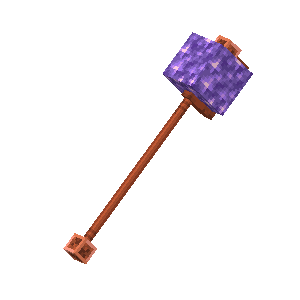 Hexical Staves





 Driver Dots


 Grimoires

 Casting Carpets
 Hex Candles
 Media Jar




 Media Logs

 Lei
Lei
 Plushies


 Potions of Wooleyeing
 Sentinel Beds


 Curios


 Pedestals

 Genie Lamps
 The Great Work
 Patterns
 Pattern Manipulation
 Grok
Grok Spelunking
 Telepathy
 Akashic Utilities
 Mage Blocks
 Rotation
 Amber Preservation
 Dyes
Dyes

































































































 Mage Hand
 Mage Mouth
 Prestidigitation
 Toasting
 Wristpocket
 Hexical Spells
 Projectiles
 Muting
 Redstone Zapping
 Specialized Breaking
 Conjurable Delights
 Conjure Spike
 Block Mimicry
 Circle Spells
 Evocation
 Hotbar
 Pyrotechnics
 Sentinel Defense
 Shaders
 Specks
 Specks
 Meshes
 Great Spells
 Greater Blink